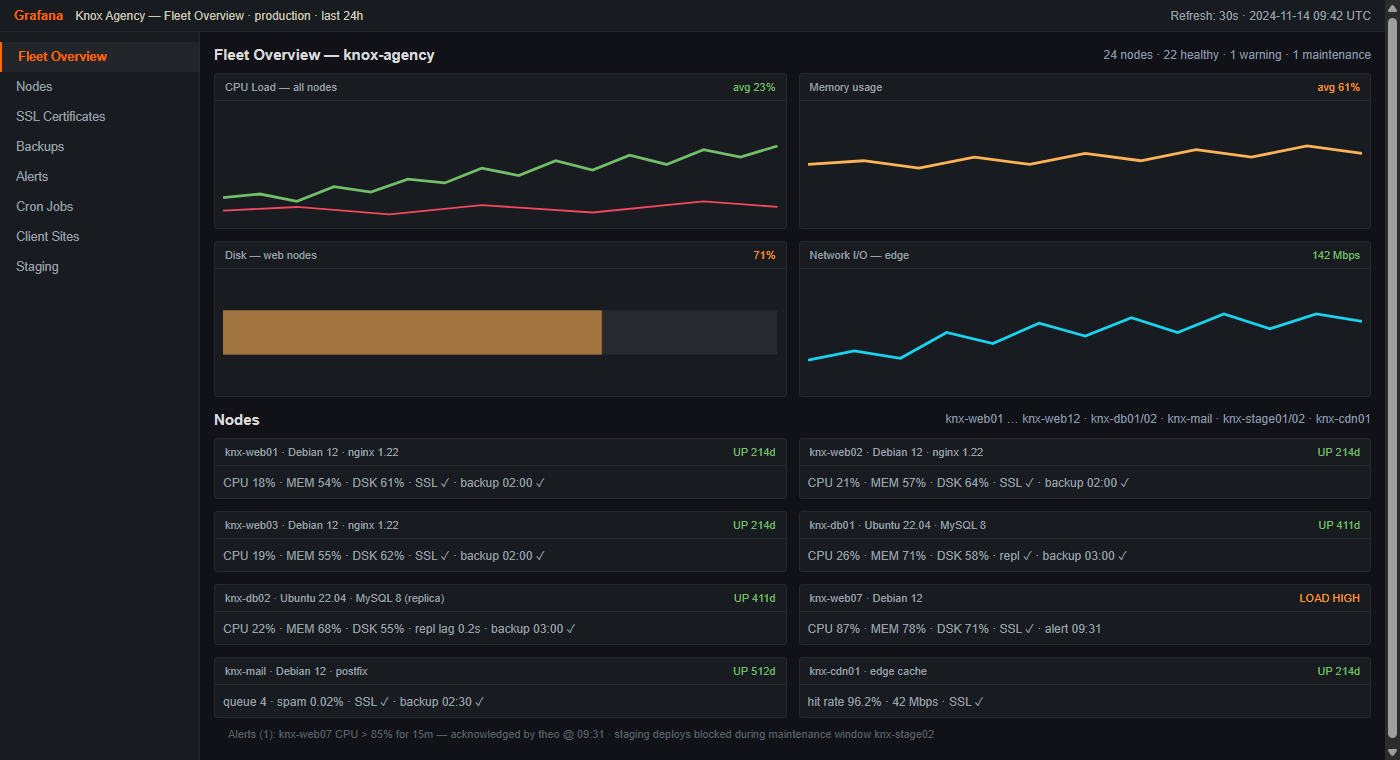
01 — Grafana fleet overview: 24 nodes at a glance
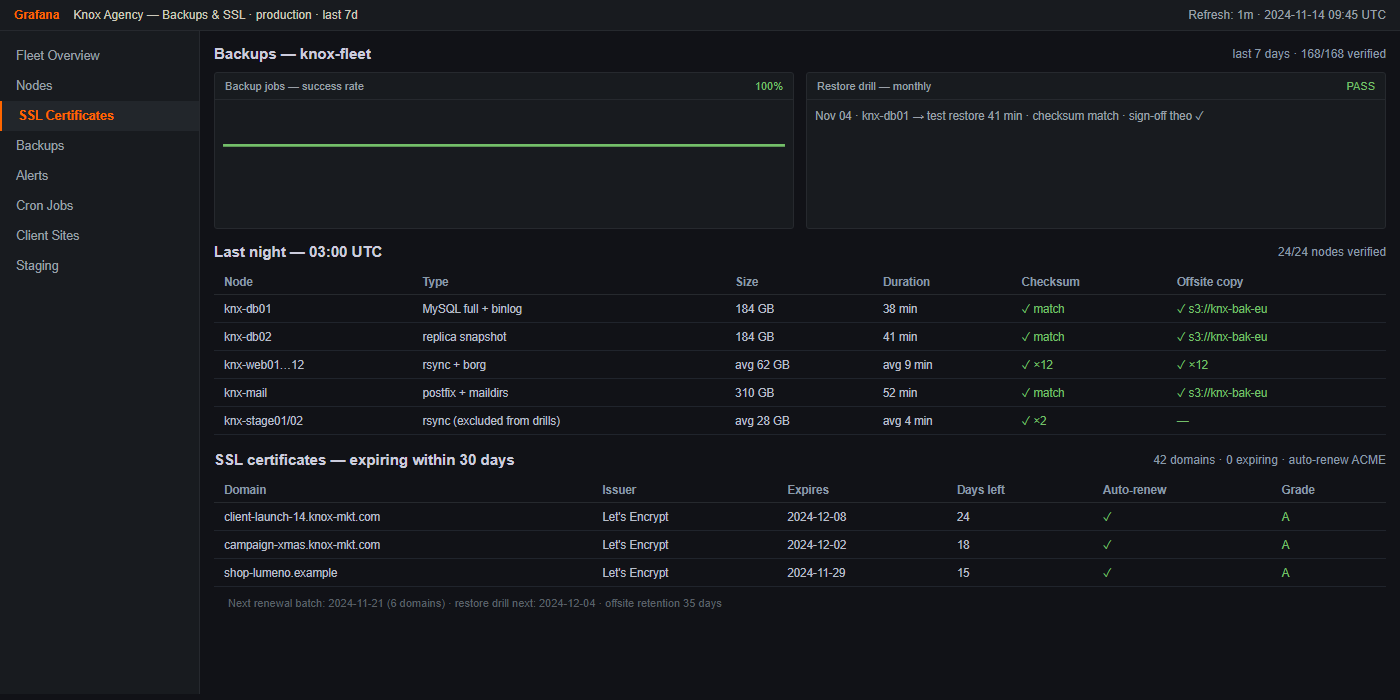
02 — Backups & SSL: verified nightly, renewed automatically
Twenty-four hardened servers running twenty-plus client sites for a growing agency: Linux provisioning, monitoring, backups and SSL — done once, done right, and invisible to the people who actually pay for it.
Knox Marketing Agency had grown faster than its infrastructure. Twenty-plus client sites — landing pages, e-commerce shops, campaign microsites — lived on a scatter of rented servers from three different providers: different panels, different backup habits, and one box that had already failed twice during campaign launches. When a client's product launch coincided with a server crash two hours before the deadline, the agency decided the hosting had to stop being their problem.
They wanted one person to own the whole layer: provision new servers as campaigns came in, keep the old ones patched and monitored, and never again explain to a client why their launch page was down.
I consolidated the scattered fleet into a single managed estate on a cloud provider the agency could budget for, then rebuilt everything to one standard: hardened Debian and Ubuntu images, identical configs, Ansible-managed. Every node is tracked in monitoring, every backup is verified, every certificate is renewed by automation instead of a calendar reminder.
Eighteen months in production: 99.98% uptime across the fleet, with the longest single-node uptime streak at 214 days. Campaign launches that used to be a coin flip are now routine — new nodes spin up from the Ansible baseline in under 20 minutes, staging catches mistakes before production sees them, and the one load warning in the last 24 hours was acknowledged before it became an incident. The agency stopped losing nights to hosting emergencies, and their clients never learn that any of this exists.
"The hosting stopped being our problem the day TDS took the fleet. Campaign launches used to be a coin flip — now we don't even think about the servers."
One person owning the whole layer: provisioning, monitoring, backups, SSL. Done once, done right.
Contact TDS Designs → See other work